This article will explain how airline overbooking works, which baffles many travelers. On purpose, an airline company sells more tickets than there is available seats on a flight.
Airlines use a ticketing algorithm based on historical data which provides a best guess as to how many passengers will not show up.
Based on these results, they overbook to maximize ticket revenue, ensure that flights are full, and mitigate the risks and costs of overbooking compensation.
Overview
While buying a ticket and going to the airport to travel to the destination you desire is a normal part of the flying process
the behind-the-scenes workings of an airline may be frustrating to people but is necessary in order to keep the airline profitable.
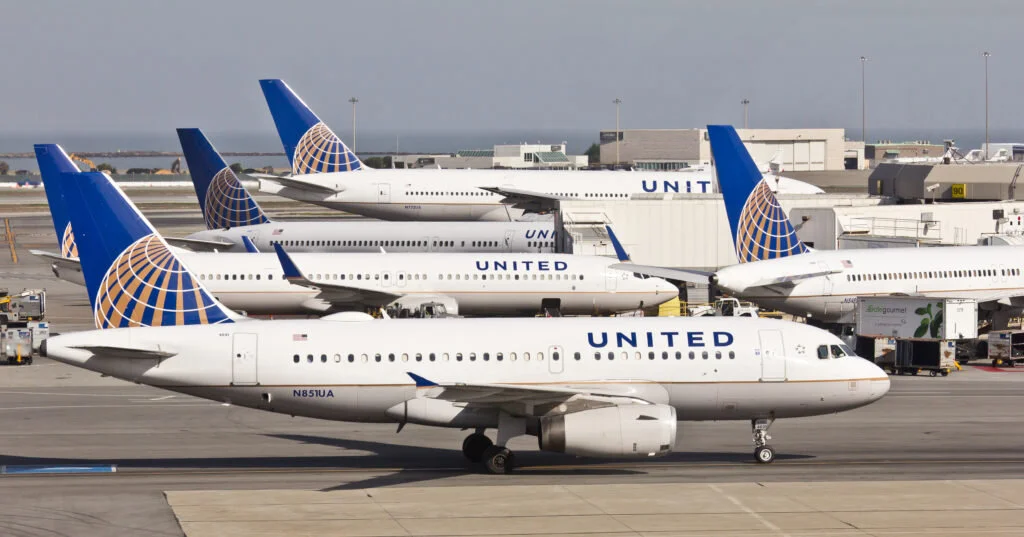
They overbook flights, and this is a practice that uses advanced mathematics, psychology, and a little bit of effective risk-taking. Let’s take a look.
The Logic Behind Overbooking
It may initially appear irrational to sell more tickets than there are seats. However, while it may seem like a greedy practice, it is more to do with the predictably irrational nature of human behaviour.
No-shows happen for a multitude of reasons. Business travellers miss flights because meetings go longer than planned.
Holidaymakers cancel flights due to a change of plan. Some people delay their flight and rebook for a later one.
Whatever the cause, airlines are well cognizant of the fact that at every flight, several seats go unsold.
Airlines lose money when seats go unfilled. An aircraft that has unsold seats is like a diner that has empty tables.
The flight’s operating costs are the same, regardless of how many tickets are sold. Fuel has to be burnt, staff has to be paid, and maintenance has to be performed. Every seat that goes unfilled is revenue lost.
Airlines do their best to predict passenger attendance. To account for cancellations and no-shows, in a bid to maximise attendance, they sell a greater number of tickets than they do seats.
The Math Behind the Curtain
No one in the airline industry simply guesses how many additional tickets to sell. They build their estimates using complex algorithms grounded in years and years of data.
Historical Patterns
Airlines have no-show statistics for each of their routes. They track no-shows for different times of day, seasons, and even for individual days of the week.
For example, a flight from New York to Chicago on a Monday morning may have a much higher no-show rate than a flight to Miami on Friday evening.
Probability Models
It is within the realm of statistics to figure out how many people are likely to show up at a flight. For instance, a loss of 5% is statistically within the realm of the show-out predictor, and hence from the predictor, the airline is free to book 5% additional tickets.
Revenue Optimization
It is a balancing act to maximize the profit of the airline and minimize the inconveniences to the are they called flight ticker bookers.
The certainly is a disincentive on the good blood of an airline to gamble on the tickets, rather than only on the passengers at no-show.
What Happens When Everyone Shows Up
Passengers may have to deal with fully booked flights where they would need to announce that they have oversold the flight.
First step with oversold flights is to ask for volunteers for someone to take a later flight in exchange for compensation in the form of cash, vouchers, or an upgrade.
If no one volunteers to take a different flight, they have to involuntarily bump passengers from the flight.
The compensation for this depends on the flight schedule and is severely regulated in each country, with the US for example requiring a compensation of about four times the flight price.
Airlines isolate some passengers, looking at things like fare class, frequent flyer status, and who checked in first.
Last to check in is usually the first to be bumped, while the front of the pack is a loyal customer with elite status.
The Human Side of Overbooking
The primary aspect of overbooking is dealing with people and their feelings. People do not like uncertainty, and they understand how it influences their feelings, so airlines put everything into frames.
The psychology of compensation. Airlines give people travel vouchers, upgrades, and other things that benfit them instead of making it seem like they are loosing.
Delays are reframed. Airlines focus on how people will make extra money, will get free hotels, and will get a ticket to fly in first class, instead of focusing on how people will be on standby for a while.
Customer loyalty. If airlines are good with overbooking, they will increase customer loyalty. Customers appreciate it when overbooking is handled well, and they get a lot of compensation.
On the other hand, overbooking can increase customer loss. If overbooking is mistreated, customers can loss value from the airlines, and customers can be definedless like in the cases when customers were removed from flights against their will.
Why Overbooking Persists
Overbooking attracts criticism and leads to some terrible headline stories, yet overbooking is not about to vanish, and in fact, there are multiple reasons as to why it should continue to exist within air travel.
Financial necessity
Operating an airline is an expensive business, and with profits being slim, the airline encourages overbooking as an operational strategy to maximize profitability for the airline.
Passenger benefit
Strange as it may seem, overbooking is beneficial to some airline customers as it has the potential to lower the cost of tickets. Airlines need as many customers as need to travel in order to maximize profits and overbooking is a strategy to accomplish this.
Operational efficiency
Airlines can oversell tickets to manage delays and disruptions as they can shuffle passengers, i.e. If a connecting flight is delayed, the empty seats can be filled by standby passengers. This can also lessen the impacts of delays on an operational schedule.
Through this lens, it is clear why overbooking should be an operational strategy analyzed by an airline as part of the air travel experience.
The Future of Overbooking
Continued advancement of technology will influence the process.
Predictive ML: With the advancements of machine learning, airlines can more accurately predict the chances of consumers no-showing and the likelihood of overbooking a flight.
Targeted Compensation: Airlines can communicate directly with individual consumers through mobile phone apps with more tailored compensation offers instead of making offers to the whole airplane.
Proactive Rebooking: Soon, airline consumers can expect to be rerouted on other flights before they even get to the gate.
While the process will continue developing, the airlines’ overall goal will always be to find the balance between full planes and happy customers.
Cocnsluion
In conclusion, overbooking is one of the certain-chaos balances that airlines have to face. There is a special ‘science’ to the system; a mix of data, psychology, and economics.
As annoying and unfaire as overbooking is, it is a neccessary evil that keeps the industry alive and ticket prices low.
FAQ
Why do airlines overbook flights?
Because empty seats mean lost revenue. Overbooking helps airlines maximize profits and keep ticket prices lower by ensuring planes fly as full as possible.
How do airlines decide how many tickets to oversell?
They use historical data and statistical models to predict no-show rates for specific routes, times, and seasons.
What happens if everyone shows up?
If too many passengers arrive, the airline asks for volunteers to take a later flight in exchange for compensation.
What if no one volunteers?
Airlines may deny boarding involuntarily, following rules that require compensation depending on the length of delay and ticket price.